
How Often Should a Chimney Sweep Come?
A chimney should be inspected at least once a year, but it only needs sweeping when soot or creosote buildup calls for it. A professional can check the flue and remove deposits; call (857) 597-2781 any time to book.
Need help now? (857) 597-2781
How often should a chimney sweep come to check your flue?
Schedule a chimney inspection at least once a year, even if you use the fireplace only occasionally. The Chimney Safety Institute of America explains that NFPA 211 calls for annual inspections of chimneys, fireplaces, and vents. An inspection checks condition; it does not mean every chimney needs cleaning every year.
Cleaning frequency depends on what the inspection finds and how much you burn. Wood use, fuel condition, draft, and the chimney’s condition affect how quickly deposits build up. A fireplace that sees frequent use may need cleaning sooner than one that is rarely lit, so follow the condition of the flue rather than relying on a calendar alone.
Book an inspection before regular seasonal use if the chimney has not been checked in the past year. A chimney sweep service can address soot and creosote deposits when cleaning is needed.
Does your chimney need an inspection, a cleaning, or both?
Inspection
Choose an inspection when you need to know the chimney’s condition, including whether it has damage, a blockage, or deposits that need attention. Annual inspection is the routine check; an inspection can also be important after a chimney fire or a change to the appliance or venting.
Cleaning
Choose cleaning when soot or creosote has accumulated in the flue. Cleaning removes combustible deposits; it is not a substitute for checking the chimney’s condition.
Inspection and cleaning
Both may be appropriate when an inspection finds deposits that need removal. Ask which work is proposed and what finding makes it necessary; Boston Chimney Sweep explains the work clearly and recommends only services a homeowner needs.
What signs suggest your chimney needs attention before the annual check?
Some warning signs call for a professional assessment rather than waiting for the next routine appointment. Don’t climb onto the roof or reach into the flue to investigate.
- Smoke entering the room — Smoke spilling into the living area can point to a draft problem or an obstruction. Stop using the fireplace and arrange an inspection before lighting another fire.
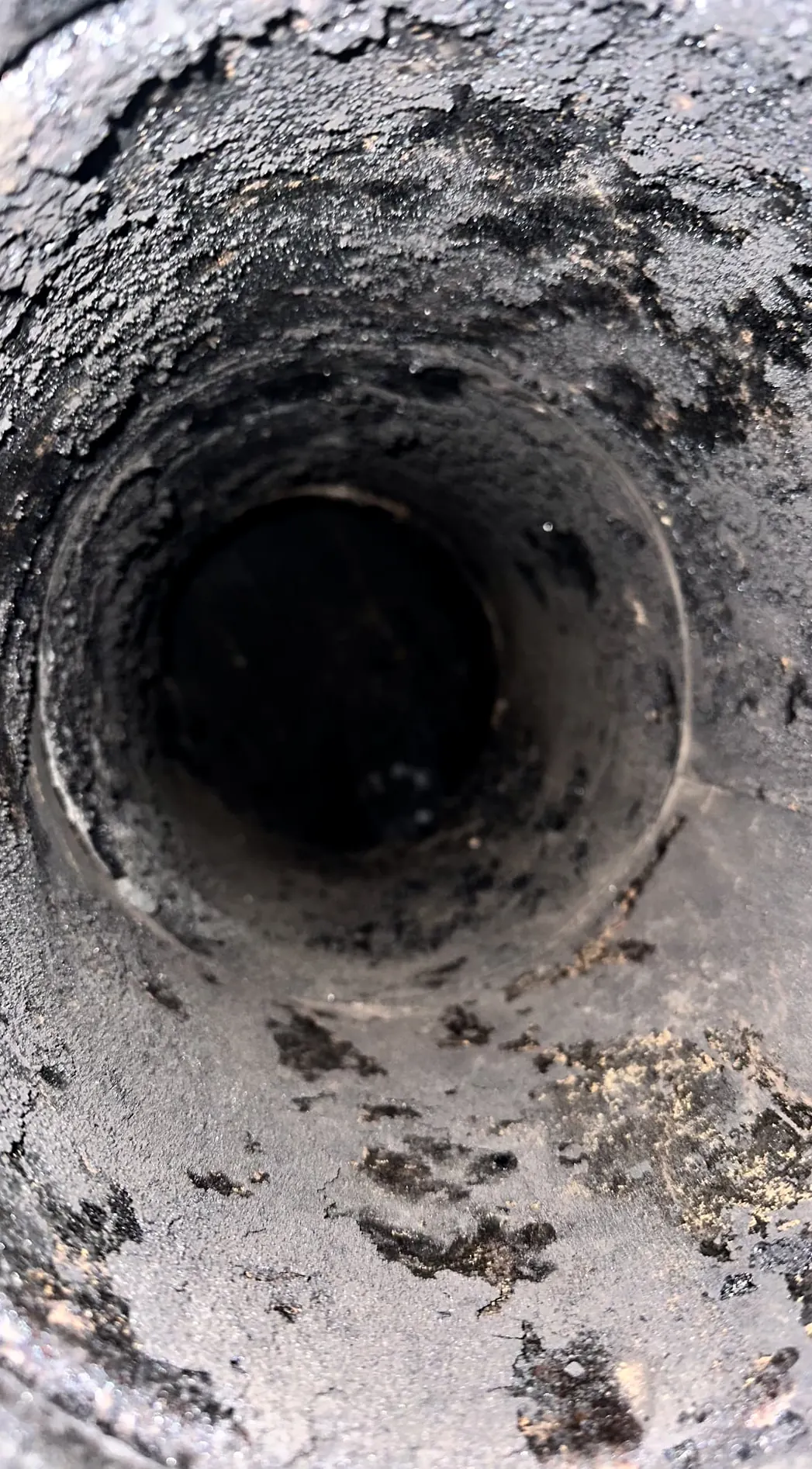
- A dark, shiny coating — Glossy or hardened creosote is different from loose soot and may be harder to remove. Ask a sweep to assess the deposit rather than trying to scrape inside the flue.
- Debris or a suspected blockage — Material falling into the firebox or a sudden change in draft can signal an obstruction or damaged chimney component. Leave the flue alone and have it checked.
- A fire or visible damage — After a chimney fire, or if you see cracked masonry or damaged parts, stop using the fireplace until a professional has assessed it. Damage can be hidden from the firebox.
Need help now? (857) 597-2781
How much creosote means it is time to sweep?
CSIA’s homeowner guidance identifies 1/8 inch of creosote or soot buildup as the point at which cleaning is needed. If the deposit is glazed or has a tar-like appearance, arrange a professional assessment; ordinary brushing may not be enough for hardened creosote.
That threshold is not a reason to measure deep inside the chimney yourself. Deposits can collect out of sight, and a flashlight at the firebox cannot show the full flue. Ask a sweep to check the passage and determine whether cleaning is required. See the CSIA homeowner resources for guidance on inspections and chimney deposits.
What can you check safely before booking a chimney sweep?
Use these checks to describe the problem and decide whether to pause fireplace use. They do not replace an inspection of the chimney interior.
- Note how often you use the fireplace — Write down whether you burn wood regularly or only occasionally and when you last had the chimney checked. Frequent use makes it especially important to watch for buildup between annual inspections.
- Look at the firebox with a flashlight — From the room, check for loose debris, unusual deposits, or visible damage around the opening. Do not put your head or tools up the flue.
- Notice how smoke behaves — Pay attention to whether smoke rises into the chimney or spills into the room. Smoke entering the room is a reason to stop using the fireplace and request an assessment.
- Check for new sounds or falling material — Listen for an unexpected change during use and note any debris that appears in the firebox. These observations help a sweep understand what changed, but they do not identify the cause.
- Record the last service date — Check receipts or household records for the most recent inspection or cleaning. If you cannot find a date, book an inspection rather than assuming the chimney is clear.
- Stop using a chimney with a warning sign — Do not light another fire if smoke is backing into the room, you suspect a blockage, or you see damage. Keep the fireplace out of use until it has been checked.
- Describe the issue when booking — Share the fuel type, how often you use the fireplace, the last service date, and any smoke or debris changes. These details help identify whether you are booking a sweep, an inspection, or both.
What can go wrong when cleaning is delayed?
Creosote is combustible, so allowing deposits to build up increases the fuel available inside the flue. A chimney fire can damage masonry or a factory-built chimney, and some damage may not be obvious from the fireplace opening. Stop using the appliance and arrange a professional inspection if you suspect a chimney fire or notice new damage.
A blockage can also interfere with smoke venting, while damaged components can make continued use unsafe. Don’t try to solve these problems by burning hotter or reaching into the chimney. A sweep can assess the condition and explain whether cleaning, repair, or another service is needed.
Need help now? (857) 597-2781
How do you book the right chimney visit?
When you book, say whether the fireplace burns wood or gas, how often you use it, and whether you have noticed smoke, debris, or visible damage. Ask for the work to be identified as an inspection, cleaning, or both, so you know what the appointment is intended to address.
The visit length depends on the chimney’s condition, access, and whether the work is cleaning alone or includes a closer inspection. A chimney with heavy deposits or a suspected problem is not the same scope as a routine sweep, so share those details when arranging the visit.
Boston Chimney Sweep is open 24/7, and same-day service is available. Call (857) 597-2781 to book, or read how much a chimney sweep costs in Massachusetts for pricing details.
Frequently asked questions
Does a chimney need sweeping every year?
Not necessarily. Have the chimney inspected at least annually, then sweep when the inspection finds soot or creosote buildup that needs removal. CSIA guidance identifies 1/8 inch of buildup as the cleaning threshold.
Does a fireplace that I rarely use still need an inspection?
Yes, annual inspection is still recommended even with occasional use. A check can identify deposits, damage, or an obstruction that may not be obvious from the room.
Should I use my fireplace if smoke comes into the room?
No—stop using it until a professional has assessed the cause. Smoke entering the room can indicate a draft issue or obstruction, and using the fireplace again may worsen the problem.
What should I tell the sweep when I book in Boston?
Share the fuel type, how often you use the fireplace, the last inspection or cleaning date, and any smoke, debris, or damage you have noticed. Those details help identify whether to book a sweep, an inspection, or both.
Book Your Chimney Sweep
Call (857) 597-2781 any time to book an inspection or cleaning.