
Can I Sweep My Chimney Myself?
You can sweep your chimney yourself only in a limited sense: clean cool ash from the firebox, but leave full-flue brushing to a chimney professional. A flashlight check can help you spot concerns, but it cannot reveal the full condition of the flue.
Need help now? (857) 597-2781
Can I Sweep My Chimney Myself Safely?
You can take care of simple fireplace cleanup, but sweeping the full chimney is different. Soot and creosote can cling inside the flue, where you cannot judge their depth or condition from the hearth. A brush pushed into the flue without the right access and assessment may miss deposits or dislodge material without removing it.
Keep do-it-yourself work to a cold fireplace: remove loose ash from the firebox and look at visible surfaces. Do not climb onto the roof or try to reach into the flue. A chimney sweep can check the passage and remove deposits with tools suited to the chimney; see our chimney sweep service when the flue needs attention.
The Chimney Safety Institute of America’s homeowner resources explain that chimneys should be inspected annually, with sweeping needed when deposits or other conditions call for it. That inspection is different from a quick look inside the fireplace.
How to Check Your Fireplace Before You Use It
These checks help you identify visible issues; they are not a substitute for inspecting and sweeping the full flue. Work only when the fireplace and ashes are completely cold.
- Let the fireplace cool completely — Wait until there is no heat or ember glow before touching ash or fireplace parts. Check for warmth near the firebox; if you feel heat, stop and leave cleanup for later.
- Put on gloves and prepare a metal container — Use gloves and a metal ash container for loose ash rather than a household bag or plastic bin. Check that the container is stable and has room for the ash you plan to remove.
- Look at the firebox with a flashlight — Shine a flashlight over the firebox floor and visible walls. Check for loose debris, cracked-looking surfaces, or material that has fallen in; do not chip, scrape, or pull at masonry.
- Check the damper from the fireplace opening — Look for the damper plate above the firebox and note whether it appears blocked, damaged, or stuck. Do not force it; a damper that will not move normally needs professional attention.
- Remove only loose, cold ash — Use an ash shovel to transfer loose ash into the metal container, leaving a thin layer if you use one for your fireplace routine. Check that you are not scooping up pieces of brick, metal, or other parts.
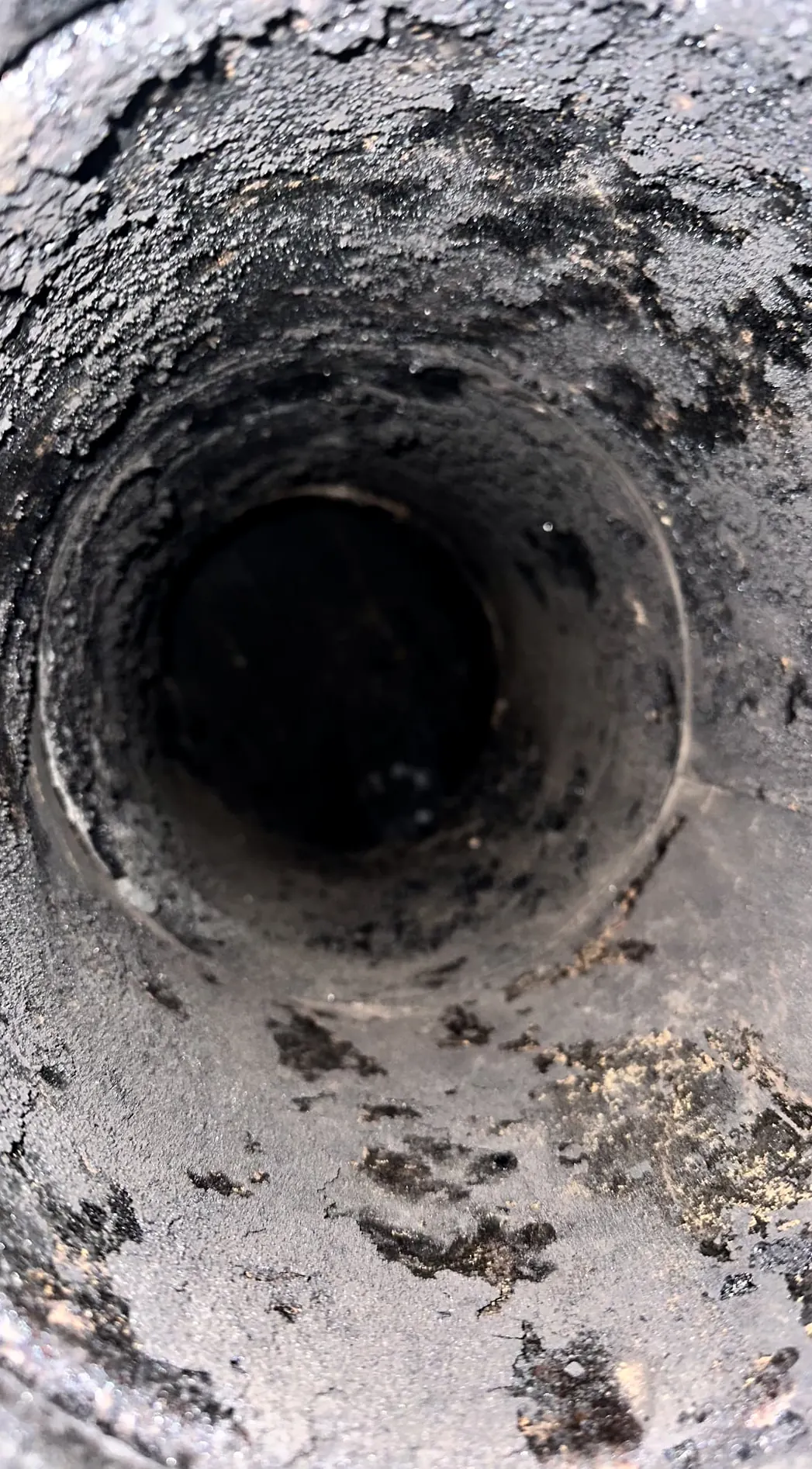
- Look for signs of soot or creosote — Use the flashlight to inspect what you can see above the firebox, without reaching into the flue. Check for dark, shiny, or crusted deposits; visible buildup is a reason to stop before lighting another fire.
- Notice smoke behavior on your next fire — If smoke spills into the room instead of rising into the chimney, stop using the fireplace and arrange an inspection. Check whether the damper is open, but do not assume that fixing its position resolves a blockage or flue problem.
Which Chimney Cleaning Option Fits Your Situation?
Choose the level of work based on what you can actually see and how the fireplace behaves. A clear-looking firebox alone does not show whether the full flue is clear.
Firebox ash cleanup
This is a reasonable homeowner task when the fireplace is fully cold and you are removing only loose ash. It does not remove creosote from the flue or confirm that the chimney is safe to use.
Professional chimney sweep
Choose a sweep when you see deposits, have not had the chimney checked, or cannot tell whether the flue is clear. A sweep addresses buildup inside the chimney rather than just the visible firebox.
Chimney inspection
Choose an inspection when you notice damage, smoke entering the room, a stuck damper, or another change in how the fireplace works. An inspection looks for conditions that a cleaning-only view may not answer.
Need help now? (857) 597-2781
What Signs Mean You Should Stop DIY Chimney Cleaning?
Do not keep cleaning or light another fire to test a chimney when something looks or works differently. These signs call for a chimney sweep or inspection rather than more work with a household brush.
- Shiny or thick deposits — Dark, glossy, or crusted material may be creosote. The CSIA notes that a creosote layer of 1/8 inch or more should be removed; measuring it from the fireplace opening is not a reliable way to assess the full flue.
- Smoke entering the room — Smoke spilling into the living space can point to a draft, blockage, or other chimney problem. Stop using the fireplace until the cause has been checked.
- Loose pieces or visible damage — Fragments in the firebox, damaged-looking masonry, or a part that appears displaced need a closer look. Do not try to repair or pull out pieces yourself.
- A damper that sticks or will not close — A stuck damper can affect fireplace operation and may signal a mechanical problem or obstruction. Avoid forcing it and arrange service.
- A sudden change in fireplace performance — New odors, unusual smoke behavior, or a fireplace that no longer draws as it did are reasons to stop and seek an inspection. A visual check from below cannot identify every cause.
Why a Chimney Brush Alone Can Leave Problems Behind
A brush is only useful when it matches the flue and reaches the areas that need cleaning. Chimneys can have bends, different internal shapes, and sections that are not visible from the hearth. Choosing a brush by appearance or pushing it upward from the fireplace does not show whether it has cleaned the full passage.
Creosote also varies in texture. Loose soot is not the same as hard, glazed deposits, and the right removal method depends on what is present. The CSIA’s guidance on preventing chimney fires describes how creosote builds up and why deposits should be addressed before they create a hazard.
Trying to work from the roof adds a fall risk and still may not tell you whether the chimney has damage. If you see deposits you cannot identify, notice debris, or have no clear view of the flue, stop the DIY attempt and book a professional.
When a Boston Chimney Sweep Should Take Over
Book a sweep when creosote is visible, smoke comes back into the room, the damper does not operate normally, or you cannot verify the flue’s condition. These are not problems that ash removal or a quick brush from below can settle. Our chimney sweep service addresses buildup in the chimney, and we explain the work clearly and recommend only services a homeowner needs.
Boston Chimney Sweep serves Boston and towns within 30 miles. Same-day service is available, and chimney work comes with a warranty starting from 2 years. For a cost overview, see how much a chimney sweep costs in Massachusetts; to arrange service, contact us.
Need help now? (857) 597-2781
What to Do After a DIY Fireplace Check
If the firebox is cold and you removed only loose ash, dispose of it in the metal container and keep it away from anything that can burn. Do not put ash into ordinary household waste until you are sure it is completely cold. Keep the fireplace out of use if you noticed damage, deposits, or a smoke problem.
If your check did not reveal anything concerning, remember that a visible firebox is not proof that the whole chimney is clean. The CSIA homeowner guidance describes an annual inspection schedule; an inspection can identify conditions beyond what you can see from the hearth. Ask for a chimney inspection when the chimney’s condition is unknown or the way it performs has changed.
Frequently asked questions
What can I safely clean from the fireplace myself?
Once the fireplace is completely cold, you can remove loose ash from the firebox with gloves and an ash shovel. Keep the cleanup to visible, loose material; do not scrape masonry or reach into the flue.
How can I tell whether creosote needs removal?
Dark, shiny, or crusted deposits are a reason to stop using the fireplace and arrange a professional check. The CSIA identifies 1/8 inch of creosote as a removal threshold, but a view from the hearth cannot show how much is present throughout the flue.
Can I use a chimney brush from the fireplace opening?
A brush from the fireplace opening may not fit the flue or reach all of its surfaces, and it cannot confirm the chimney’s condition. Leave full-flue brushing to a chimney sweep, especially when you see deposits or cannot inspect the passage.
Should I stop using the fireplace if smoke comes into the room?
Yes. Stop using it and arrange a chimney inspection, because smoke entering the room can indicate a blockage, draft issue, or another problem. Checking that the damper is open does not rule out those causes.
Leave Full-Flue Sweeping to a Pro
For creosote, smoke problems, or a chimney you cannot assess from the hearth, book a chimney sweep with Boston Chimney Sweep.