
Is a Chimney Sweep Done From Inside or Outside?
A chimney sweep can be done from inside or outside; the access route depends on the fireplace, flue, roof access and the setup needed to clean safely. A brush and collection equipment remove deposits along the flue, whether the sweep starts at the firebox or the chimney top.
Need help now? (857) 597-2781
Is a chimney sweep done from inside or outside for your flue?
Either route can be used. A sweep may work upward from the fireplace opening or downward from the chimney top, depending on the chimney design, access and the equipment needed for the job. In both cases, the cleaning tool must travel through the flue—the passage that carries smoke outdoors.
The route does not tell you whether the chimney is clean or safe to use. The condition of the flue, deposits inside it and any obstruction matter more than whether the brush enters from the roof or the room. A chimney sweep may also recommend an inspection when the concern goes beyond removable soot or creosote.
The chimney sweep service covers professional chimney cleaning. For Boston Chimney Sweep, cleaning starts from $89; the separate guide to chimney sweep costs in Massachusetts explains what can affect a cleaning quote.
What determines whether the chimney brush enters indoors or at the roof?
Fireplace and flue layout
The fireplace opening, damper and shape of the flue affect how a brush and rods can pass through. A sweep checks that the chosen route reaches the full section that needs cleaning.
Roof and chimney-top access
A top-down cleaning depends on safe access to the chimney opening and enough room to position the tools. A steep or obstructed roof can make an indoor approach more practical.
How deposits are contained
A sweep considers where to place protective coverings and collection equipment before work starts. This helps control soot as the brush loosens deposits, whether work begins at the fireplace or roof.
What the sweep finds
A blockage, damaged part or heavy deposit can change the next step. Brushing removes deposits; it does not repair a damaged liner or clear every possible obstruction without checking the flue.
What happens during an inside or top-down chimney sweep?
The exact sequence depends on the chimney and the access route, but a methodical cleaning follows the same basic goal: protect the room or roof work area, move a brush through the flue, and check the result.
- Identify the fireplace and flue — The sweep checks the fireplace opening, damper and visible chimney setup to understand the route through the flue. The damper must not block the path of the cleaning tools.
- Set up the work area — For indoor access, protective coverings and a vacuum or collection system help manage loosened soot near the firebox. For roof access, the sweep checks the chimney-top opening and the work area before lowering tools.
- Choose the brush and rods — A brush is attached to flexible rods so it can travel through the flue. The sweep matches the tool to the passage rather than forcing a brush that could catch or fail to reach the surfaces.
- Move the brush through the passage — From inside, rods extend upward from the fireplace; from the roof, the brush travels down from the chimney top. The sweep checks that the tool moves through the flue instead of stopping at the damper or a bend.
- Loosen soot and creosote — Repeated brushing dislodges deposits from the flue walls. The sweep pays attention to buildup that remains attached, since creosote can be more difficult to remove than loose soot.
- Collect loosened material — A vacuum or other collection setup captures material as it falls toward the fireplace or is brought out from the top. The work area is checked for remaining debris before the tools are removed.
- Check the cleaned passage — The sweep checks the accessible flue and the fireplace area for remaining deposits or visible concerns. Cleaning and a detailed inspection are different services; ask about a chimney inspection when you need the chimney condition assessed.
Need help now? (857) 597-2781
Which chimney-sweeping route fits the fireplace and roof?
These options describe how a professional may reach the flue; they are not separate levels of cleaning. The sweep chooses a route based on the chimney, access and how the work area can be protected.
- From inside, through the firebox — This approach starts at the fireplace and moves the brush upward. It can suit a chimney when the fireplace opening gives a workable path and the roof is difficult to reach.
- From outside, at the chimney top — This approach starts at the roof and moves the brush downward. It depends on usable roof access and a chimney opening that allows the tools to enter the flue.
- Access from both ends — A sweep may need to check or work from more than one access point when the chimney layout or deposit location calls for it. The route is chosen to reach the section that needs attention, not simply to avoid one end.
- Inspection rather than brushing alone — Choose an inspection when you need an assessment of the chimney’s condition, such as after an appliance change, sale, relining, fire or weather event. The CSIA Level 2 inspection procedure calls for a video scan in those circumstances.
When does a chimney sweep need to do more than brush the flue?
Brushing is for deposits inside the flue; it does not fix cracks, a damaged liner, a loose chimney cap or water entry. If you see damaged masonry, have recurring smoke problems, or suspect an obstruction, tell the sweep what you noticed before work begins. The chimney may need an inspection or repair in addition to cleaning.
Creosote is a combustible deposit formed during wood burning. The CSIA homeowner resource notes that a deposit measuring 1/8 inch or more is a threshold for sweeping; a homeowner should not try to judge hidden flue buildup from the fireplace opening alone. See the CSIA homeowner resources for guidance on creosote and chimney maintenance.
What signs mean you should stop using the fireplace and call a chimney sweep?
Do not try to solve a flue problem by reaching inside with a household brush or continuing to burn wood. Stop using the fireplace and arrange professional help when you notice signs that point to a blockage, heavy buildup or damage.
- Smoke enters the room — Smoke spilling into the living space can point to a draft or venting problem. Stop using the fireplace until the cause has been checked rather than relying on a different brush-access route.
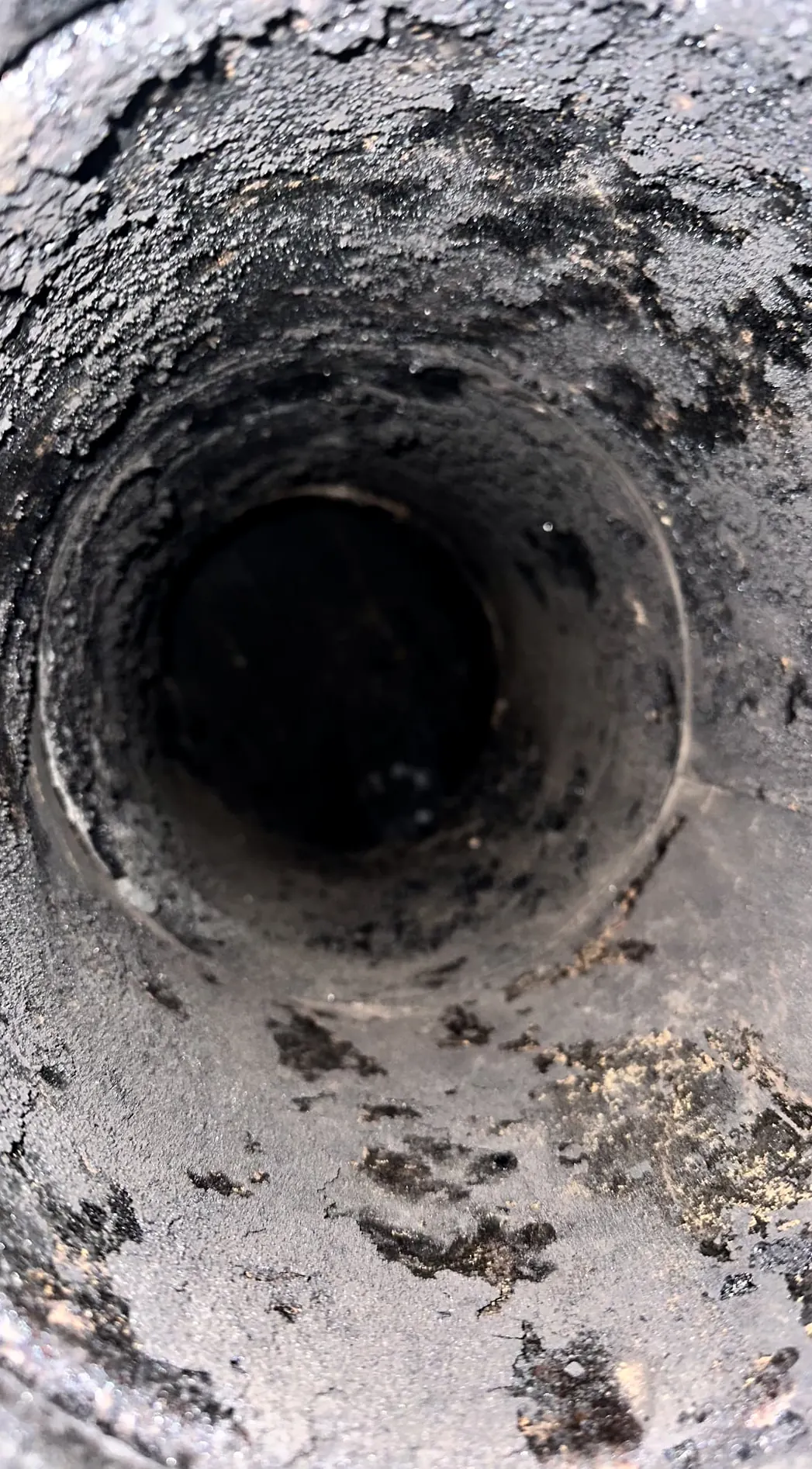
- You see shiny, tar-like deposits — Glazed or sticky-looking material can signal creosote that a basic brush may not remove easily. Have a sweep assess the flue instead of scraping it yourself.
- You hear or see signs of animals — A nest or animal can obstruct the passage. Avoid lighting a fire or pushing tools into the flue, since either action can worsen the obstruction.
- There is visible damage or a past chimney fire — Cracked masonry, a damaged liner or suspected fire damage calls for an inspection before the fireplace is used again. Cleaning removes deposits but cannot establish that damaged parts are safe.
Need help now? (857) 597-2781
What should you check after the chimney has been swept?
Check that the fireplace and work area are clear of loose debris, and ask what the sweep found inside the flue. If the sweep identifies damage or an obstruction, ask whether the next service should be an inspection, repair or removal of the obstruction rather than assuming another cleaning will resolve it.
A chimney cleaning does not replace an inspection when one is needed. A Level 2 inspection includes a video scan under the cited CSIA procedure and is recommended for specific changes or events such as a new appliance, a home sale, relining, fire or severe weather.
How can Boston homeowners book a chimney sweep?
Tell us whether you have a fireplace or stove, which access concerns you have noticed, and whether smoke, an animal or visible damage is involved. That information helps us understand whether you are booking a cleaning or need to ask about an inspection or another chimney service.
Boston Chimney Sweep serves Boston and towns within 30 miles. Garrett Sullivan, the owner, has 16 years of chimney experience and was born and raised in Massachusetts. Call (857) 597-2781 any time to book; we are open 24/7, and same-day service is available. You can also contact us to arrange a visit.
Frequently asked questions
Does chimney cleaning always require access to the roof?
No. A chimney can often be swept from the fireplace opening when the flue layout and tools allow it. The sweep chooses roof access when the chimney setup and safe access make that route suitable.
Can a chimney be swept from the fireplace opening?
Yes, a sweep can work upward from the firebox using a brush and rods when that route reaches the flue. The damper, flue shape and any obstruction can affect whether inside access is practical.
Will an inside chimney sweep leave soot in the room?
Protective coverings and collection equipment are used to manage soot loosened during indoor work. Ask the sweep how the fireplace area will be protected and checked before the tools are removed.
What should I do if smoke comes into the room after a sweep?
Stop using the fireplace and contact a chimney professional to check the venting path. Smoke entering the room can point to a draft problem, blockage or another condition that brushing alone may not correct.
Book a Chimney Sweep
Call (857) 597-2781 any time to book a chimney sweep or ask about an inspection.