
What Is the Difference Between a Chimney Sweep and a Chimney Cleaning?
The difference between a chimney sweep and a chimney cleaning is that “chimney sweep” can mean the professional or the service, while cleaning is the removal of soot and creosote. A sweep may also inspect the chimney and identify issues that cleaning alone will not fix.
Need help now? (857) 597-2781
What Is the Difference Between a Chimney Sweep and a Chimney Cleaning?
A chimney sweep is the person or professional service; chimney cleaning is one task that service may perform. During cleaning, a sweep removes soot and creosote deposits from the flue and other areas where combustion residue collects.
The terms often get used interchangeably because a sweep commonly comes to clean a chimney. But cleaning does not mean every part of the chimney has been inspected, and a chimney can need repair even when deposits are light.
Think of the sweep as the service appointment and cleaning as the work that removes buildup. An inspection, repair, or other work may be appropriate too, depending on what the sweep finds and what you asked to have checked.
Which Chimney Sweep Service Fits the Problem You See?
Choose based on the problem, not just the name of the appointment. These distinctions can help you describe what you have noticed when you book.
Cleaning
This is the fitting service when you want soot or creosote removed. Cleaning addresses deposits; it does not by itself repair cracked masonry, a damaged liner, or a leaking chimney.
Inspection
An inspection checks the chimney’s condition and can help identify damage, obstruction, or a problem that cleaning will not resolve. It is especially relevant after an appliance change, a chimney fire, or a significant weather event.
Sweep service
A chimney sweep service is the appointment with a professional who can assess the requested work and clean when needed. Tell the sweep whether you have a wood-burning fireplace, gas appliance, or another setup so the issue is understood in context.
What Chimney Cleaning Removes—and What It Does Not Fix
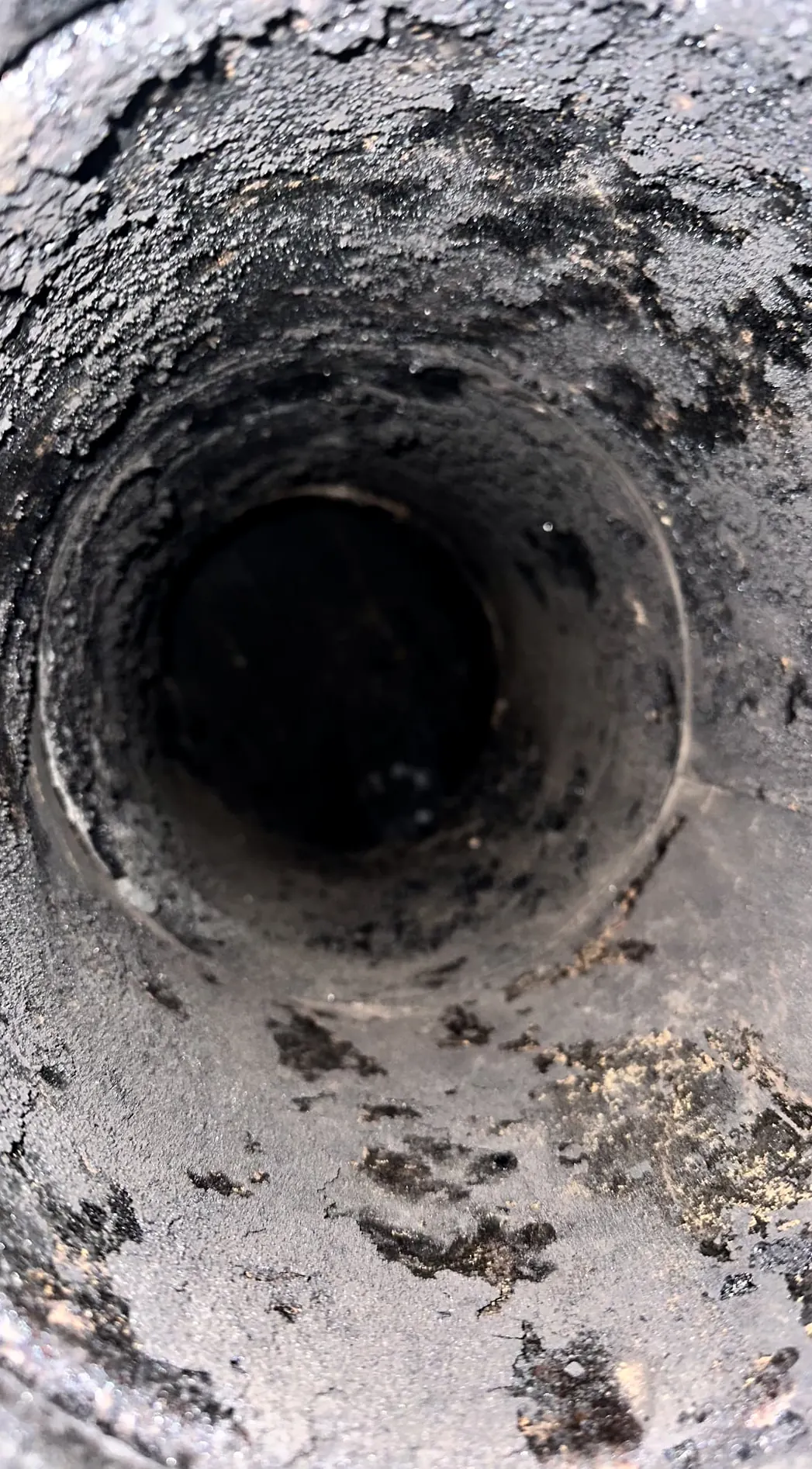
Burning wood can leave soot and creosote inside the chimney. Creosote is combustible, so the amount and condition of the deposit matter—not just whether the fireplace looks clean from the room.
- Soot and loose deposits — Cleaning removes soot and other loose combustion residue from areas of the venting system that collect it. A clean firebox does not show you what is higher inside the flue.
- Creosote buildup — Creosote can appear as flaky, tar-like, or glazed deposits. CSIA homeowner guidance cites a 1/8-inch buildup threshold for sweeping; hardened or glazed deposits may need a different approach than loose soot.
- Damage and water entry — Cleaning does not rebuild cracked masonry, replace a damaged liner, or seal a leak. Those conditions call for an inspection and, if needed, separate repair work.
- A blocked or damaged flue — Removing deposits is not the same as confirming that every component is intact and unobstructed. Ask for the concern to be checked if smoke spills into the room or you see fallen debris in the firebox.
Need help now? (857) 597-2781
Seven Safe Checks Before You Book a Chimney Sweep
You can gather useful information from inside the home and from the ground. Let the fireplace and ashes cool completely first, and do not climb onto the roof or reach into the flue.
- Let the fireplace cool — Wait until the appliance and ashes are fully cool before looking inside. Check that no embers remain before opening the firebox.
- Note the appliance type — Write down whether you use a wood-burning fireplace, gas fireplace, or stove. This tells the sweep what kind of venting setup and residue may be involved.
- Look at the firebox — Use a flashlight to look for fallen pieces of masonry, loose debris, or heavy residue. Do not scrape deposits or put your hands into the flue.
- Check the damper from below — Look for a damper that appears stuck, bent, or unable to close. Do not force it; mention what you see when you book.
- Recall how the fireplace has behaved — Note smoke entering the room, a smoky odor, or difficulty getting smoke to go up the chimney. These signs help identify whether the concern goes beyond routine cleaning.
- Observe the chimney cap from the ground — If you can see the top of the chimney safely from the ground, note whether the cap appears missing or visibly displaced. Do not use a ladder or climb to confirm.
- Describe recent changes — Mention a new appliance, a chimney fire, or significant storm damage. These changes can call for an inspection in addition to cleaning, and a Level 2 inspection includes a video scan under the CSIA Level 2 inspection procedure.
How Long a Chimney Cleaning Visit Takes Depends on the Work
There is no single visit length for every chimney. The time depends on the setup, access, the amount and condition of the deposits, and whether the appointment also needs an inspection or follow-up work.
A straightforward cleaning and an appointment that uncovers heavy creosote or a damaged component involve different tasks. When you book, describe the appliance and any symptoms you have noticed so the requested work is clear.
For what the service includes, see our chimney sweep service. If the question is about price, our guide explains how much a chimney sweep costs in Massachusetts.
When Smoke or Creosote Means You Should Stop Using the Fireplace
Do not treat every concern as a request for routine cleaning. Pay attention to changes in how the fireplace drafts and to signs of a possible chimney problem.
- Smoke enters the room — Stop using the fireplace and arrange an inspection if smoke repeatedly spills indoors. A smoky fireplace can signal a draft or blockage issue that cleaning alone may not correct.
- Heavy or glazed creosote is visible — Do not try to burn off or scrape out a heavy deposit yourself. Ask a sweep to assess the buildup and determine the appropriate removal method.
- You see debris or suspect damage — Fallen masonry, a damaged-looking flue, or signs of water entry warrant a closer look before you use the fireplace again. Cleaning cannot restore a broken or deteriorated component.
- There has been a chimney fire or major event — Do not resume use until the chimney has been inspected. CSIA guidance also identifies an appliance change, sale, relining, fire, or weather event as reasons to consider a Level 2 inspection.
Need help now? (857) 597-2781
When an Inspection Belongs Alongside Chimney Cleaning
An inspection answers a different question from cleaning: it evaluates the chimney’s condition, while cleaning removes deposits. The CSIA homeowner resource cites NFPA 211’s annual inspection guidance; that does not mean every chimney needs sweeping every year, because cleaning depends on use and what an inspection finds.
An inspection is particularly useful when the appliance or fuel changes, when you are preparing to sell or reline the chimney, or after a fire or significant weather event. In those situations, cleaning alone may leave the central concern unanswered.
Tell us what prompted the appointment and whether you want the chimney cleaned, inspected, or both. Garrett Sullivan has 16 years of experience with chimneys and recommends only the services a homeowner needs.
What to Do After You Decide Between a Sweep and Cleaning
Write down your appliance type, the last time it was used, and any smoke, odor, or visible debris you noticed. That gives the sweep practical details to consider before deciding whether cleaning, inspection, or repair is the right next step.
If you only want combustible deposits removed, ask about cleaning. If you noticed damage, smoke entering the room, a chimney fire, or a change to the appliance, describe that first and ask whether an inspection should be included.
You can contact us to book; same-day service is available. For creosote, smoky-fireplace, and annual-inspection guidance, see the CSIA homeowner resources.
Frequently asked questions
Does a chimney sweep mean the person or the service?
It can mean either. In everyday use, people often call the cleaning appointment a chimney sweep, while the cleaning itself is the removal of soot and creosote.
Does chimney cleaning remove creosote?
Yes, cleaning is intended to remove soot and creosote deposits from the chimney. The amount and condition of the creosote affect the work needed, so heavy or glazed buildup should be assessed by a sweep.
How long does a chimney cleaning visit take?
There is no fixed duration because access, buildup, and the work requested vary by chimney. An inspection or repair need can add work beyond removing deposits.
Should I book a sweep if my fireplace is smoky?
Yes, tell the sweep that smoke is entering the room rather than booking it as routine cleaning alone. Stop using the fireplace until the cause has been checked, since cleaning may not correct a draft or blockage problem.
Book a Chimney Sweep
Call (857) 597-2781 to book a chimney sweep or describe the issue you have noticed.