
Can You Legally Sweep Your Own Chimney?
Yes, you can generally sweep your own chimney in the United States; there is no single nationwide rule requiring every homeowner to hire a professional. Local requirements, appliance instructions, property rules, and insurance terms may still affect what you can do.
Need help now? (857) 597-2781
Can You Legally Sweep Your Own Chimney? The Short Answer
In general, homeowners may clean their own chimneys. There is no single nationwide law that categorically requires every homeowner to hire a chimney sweep for routine cleaning, but that does not mean every situation is covered by the same rules.
Check the rules that apply to your home before starting: local fire or building requirements, a landlord or condominium association’s rules, your appliance manufacturer’s instructions, and your home insurance policy. Those requirements can matter independently of whether a homeowner is generally allowed to do the work.
A safety recommendation is not automatically a legal requirement. For example, the Chimney Safety Institute of America’s homeowner guidance recommends annual chimney inspections. Treat that as a maintenance benchmark, not as proof that the law requires you to hire a professional.
Which Chimney Rules Apply to Your Home?
Start with the rules and instructions tied to your specific property and heating appliance. If you rent, ask the property owner who is responsible for chimney maintenance; if you live in a condominium, check the association’s rules for shared chimneys and roof access. Do not assume that permission to clean the firebox means you may access a shared flue or climb onto a common roof.
Read the appliance manual for cleaning and inspection instructions, especially for a gas fireplace or a wood-burning insert. If the manual calls for a qualified service professional, follow that direction rather than treating a general rule for homeowners as permission to service the appliance yourself.
If a local official, landlord, association, or insurer has given you a specific requirement, ask what documentation or inspection they need. A sweep can clean deposits, but that does not automatically satisfy a separate inspection, repair, or recordkeeping requirement.
DIY Chimney Sweeping or a Professional Sweep: Which Fits?
A limited owner-level check
Choose this when you want to look for obvious debris from the fireplace opening or read the appliance instructions. Keep both feet on the floor, do not dismantle flue parts, and stop if you see damage or a blockage.
A professional chimney sweep
Choose a professional when you cannot safely reach the flue from indoors, do not have a correctly sized brush and rods, or need the chimney inspected as well as cleaned. Ask what the visit includes, whether the flue will be inspected, and whether you will receive written findings.
A separate inspection or repair
Choose this when you see cracked or missing flue material, loose masonry, a damaged cap, water entry, or signs of a past chimney fire. Brushing deposits away does not repair a damaged chimney or establish that it is safe to use.
Need help now? (857) 597-2781
What Should You Check Before Sweeping Your Chimney?
- Confirm the appliance is completely cold — Do not brush or vacuum a warm firebox, hot ash, or a recently used flue. If any material still feels warm, leave it alone until it is fully cold.
- Read the appliance instructions — Check whether your fireplace or stove has special cleaning directions. Do not apply wood-burning chimney steps to gas equipment.
- Use the right equipment — A flue brush must fit the flue shape and size, and its rods must connect securely. Do not force an oversized brush or improvise with household tools.
- Keep the work at a safe access point — Plan to work from the fireplace opening or another safe indoor access point. Do not climb onto the roof to reach the chimney.
- Know what would make you stop — Before starting, decide to stop if you find a blockage, damaged flue material, water, an animal, or an object you cannot identify.
How Can You Sweep Only the Accessible Parts Safely?
- Read the manual and check the chimney’s use — Identify whether the chimney serves a wood-burning appliance, fireplace, or other equipment, then follow its manual. If you cannot identify the appliance or the right cleaning method, do not start.
- Make sure the fireplace is cold — Check the firebox and ash before handling tools. If anything is warm, wait; a household vacuum can ignite hot ash.
- Protect the hearth area — Move nearby items and lay a drop cloth around the fireplace opening. Check that the cloth covers the area where soot could fall, without blocking your safe exit.
- Look into the firebox with a flashlight — Check for visible loose debris, animal nesting material, fallen masonry, or a blocked opening. Stop if you see an obstruction or any damaged parts.
- Check the brush and rods before use — Use a chimney brush suited to the flue and rods that lock together firmly. Reject a brush that is too large, too small, damaged, or difficult to control.
- Work only from safe indoor access — Use controlled strokes with the brush and rods, and do not force them past a tight spot. If the brush catches or the rods loosen, stop and bring the equipment back carefully.
- Collect debris only after it is cold — Use equipment designed for fireplace ash, not a standard household vacuum. Check that no warm embers remain before collecting soot or debris.
- Check the visible area again — Use the flashlight to look for remaining debris, loose material, or a blocked passage from the firebox. This limited view is not a full chimney inspection; leave any uncertainty for a professional.
When Should You Stop and Call a Chimney Sweep?
Stop if the brush will not move freely, the flue appears blocked, debris falls into the fireplace, or you see cracked tiles, loose mortar, water damage, or signs of a fire inside the chimney. Do not try to remove a lodged tool or repair a flue by reaching farther into it; a stuck brush or damaged liner can make the problem worse.
A smoky fireplace, an animal in the chimney, or a suspected chimney fire also calls for professional attention rather than a DIY sweep. Cleaning removes deposits; it does not correct a drafting problem, remove an animal safely, or confirm that fire-damaged parts are sound.
Our chimney sweep service is one option when the flue needs professional cleaning. Garrett Sullivan, the owner of Boston Chimney Sweep, has 16 years of chimney experience and was born and raised in Massachusetts.
Need help now? (857) 597-2781
Which Chimney Signs Mean a DIY Sweep Is Not Enough?
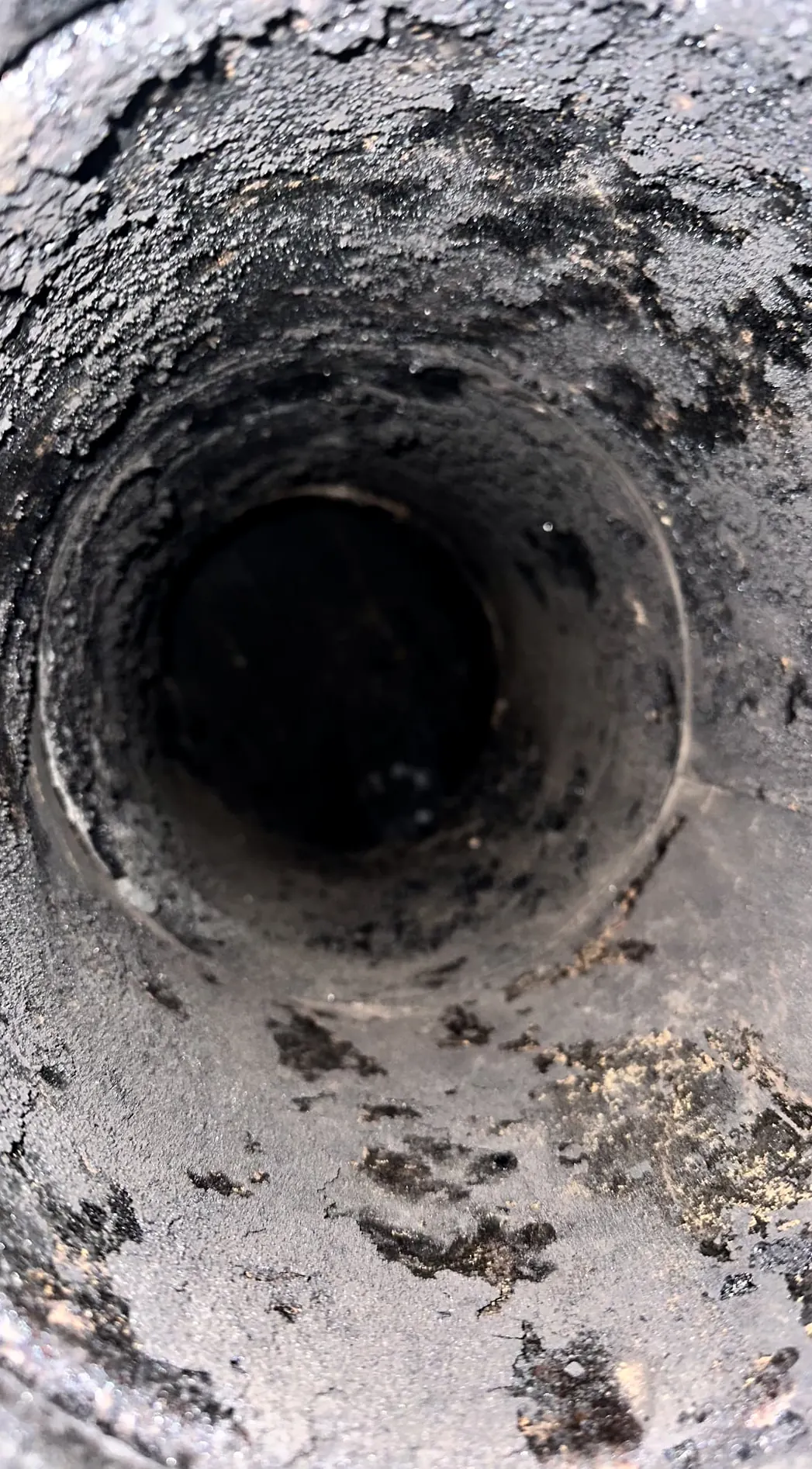
- Creosote buildup — A thick, shiny, or tar-like deposit is not the same as loose soot and can be difficult to remove with basic homeowner equipment. CSIA homeowner guidance identifies creosote at 1/8 inch thick as a reason for sweeping; a brush alone also cannot confirm the flue is undamaged.
- Smoke entering the room — Smoke spilling into the living space can point to a blockage or a draft problem. Stop using the fireplace until the cause has been checked rather than trying repeated fires to clear it.
- Pieces of tile or masonry — Material in the firebox may signal damage inside the chimney. Do not sweep past it or use the appliance until someone has assessed the flue.
- Water, rust, or a damaged cap — These signs can indicate that moisture is entering the chimney or that a part needs repair. Cleaning alone will not address the source of water or restore a damaged component.
How Do You Book a Chimney Sweep in Boston?
When you book, describe the appliance, when it was last cleaned or inspected, and any smoke, odor, water, or debris you have noticed. Ask what the visit includes and how much time to set aside; the duration depends on access, chimney construction, buildup, and whether the inspection finds an issue that needs attention.
Boston Chimney Sweep offers same-day service and is open 24/7 for booking. Call (857) 597-2781 or contact us to arrange a visit. If you want to compare the cleaning and inspection starting prices before booking, see how much a chimney sweep costs in Massachusetts.
Frequently asked questions
Does a homeowner have to hire a professional chimney sweep?
There is no single nationwide rule requiring every homeowner to hire a professional for routine chimney cleaning. Local requirements, property rules, appliance instructions, and insurance terms can still apply to your home.
Can I sweep a chimney if I rent my home?
Check your lease and ask the property owner who is responsible for chimney maintenance before doing any work. Do not access a shared flue or roof unless you have clear permission.
Can I clean a gas fireplace chimney myself?
Follow the appliance manual, because gas equipment has different service needs from a wood-burning fireplace. If the manual directs you to a qualified professional or you are unsure what the vent serves, do not use a wood-chimney brush method.
Does sweeping my own chimney count as an inspection?
No. A brush can remove deposits, but it does not provide a full view of the flue or establish that the chimney is in good condition. Arrange an inspection when you need the chimney’s condition assessed or see signs of damage.
Book a Boston Chimney Sweep
Call (857) 597-2781 any time to book. Same-day service is available; tell us what appliance you use and what you have noticed.