
Do Chimney Sweeps Still Use Brushes?
Yes, chimney sweeps still use brushes to remove soot and creosote from chimney walls. The brush type and size must match the flue, so the sweep checks the chimney before choosing tools.
Need help now? (857) 597-2781
Do Chimney Sweeps Still Use Brushes on Every Flue?
Yes. A chimney brush remains a basic tool for loosening soot and creosote from the inside walls of a flue. The sweep attaches it to rods so the brush can reach through the chimney rather than just clean the visible fireplace opening.
Not every brush fits every chimney. A sweep first checks the flue’s shape, size, lining and condition, then chooses a brush and method that can clean without harming the chimney. A brush that is too small can miss deposits; one that does not suit the liner can cause damage.
How Brush Material and Chimney Shape Affect the Cleaning
The brush is selected for the flue—not simply because it is the newest tool in the kit. These are common approaches a sweep can match to the chimney’s construction and condition.
Wire-bristle brush
A wire brush is used for suitable masonry flues. The sweep checks that the flue is sound and that the brush size fits, since the wrong brush can scrape or damage chimney surfaces.
Synthetic-bristle brush
A synthetic brush can suit flues where metal bristles are not appropriate. Its bristles need to fit the flue closely enough to reach deposits without forcing the brush through a tight or damaged area.
Round or square brush head
The brush head should follow the flue’s shape. A round head in a square flue, or a mismatched head in a narrow passage, can leave deposits behind along the corners or edges.
What Happens During a Brush-Based Chimney Cleaning
A brush is only one part of the job. A careful cleaning also accounts for the fireplace opening, the route through the flue and the debris loosened along the way.
- Check the fireplace and flue access — The sweep looks at the firebox, damper and accessible flue opening before setting up. This helps identify an obstruction or visible damage that could affect the cleaning method.
- Protect the room — A drop cloth and sealed work area help keep soot from spreading into the living space. The sweep checks the fireplace opening and surrounding floor for gaps in the protection.
- Choose a brush and rods — The sweep matches the brush head to the flue’s shape and lining, then connects it to rods. The fit and condition of the flue guide the setup before brushing begins.
- Brush the flue in controlled passes — The brush and rods move through the flue to loosen soot and creosote. The sweep checks that the tools move through the passage without catching or meeting an unexpected obstruction.
- Capture loosened debris — A vacuum designed for soot, or another appropriate collection setup, captures debris at the fireplace. The sweep checks the work area and firebox for escaped dust as cleaning continues.
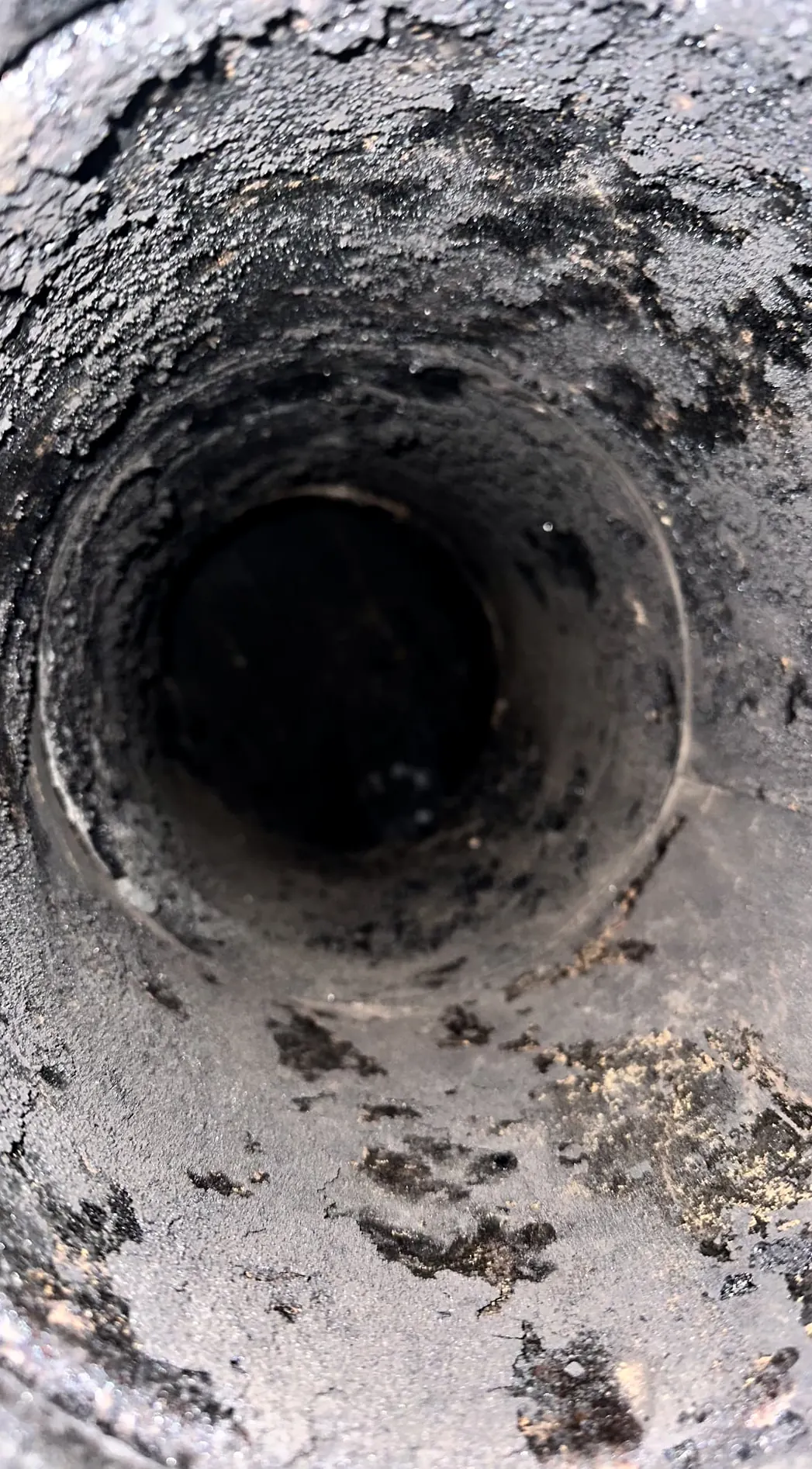
- Address visible buildup — The sweep checks the firebox, smoke chamber and accessible flue surfaces for remaining deposits. Creosote can be harder to remove than loose soot, so the method must fit the material and the surface.
- Check the result and the work area — After brushing, the sweep checks accessible areas for remaining debris or signs of damage and cleans up the collected soot. If the inspection shows a problem beyond routine buildup, that needs attention before assuming brushing alone solved it.
Need help now? (857) 597-2781
What Soot and Creosote Signs Mean for Brush Cleaning
A dark chimney does not tell the whole story. The type, thickness and location of deposits affect whether routine brushing is suitable or a closer assessment is needed.
- Loose, powdery soot — Loose soot is often the kind of deposit a suitable brush can dislodge. The sweep still checks the flue for obstructions and damage rather than judging the job by what falls into the firebox.
- Hard or shiny deposits — Glazed, hardened creosote may not come off like loose soot. A sweep needs to assess the deposit and chimney condition instead of forcing an ill-fitting brush through the flue.
- A layer around 1/8 inch — CSIA identifies creosote buildup at 1/8 inch as a point for removal. See the CSIA homeowner resources for chimney care guidance.
- Debris or a blocked passage — Leaves, nesting material or other obstructions are not simply soot to brush away. Keep the fireplace out of use and arrange an inspection if the flue appears blocked.
When a Chimney Brush Is Not Enough
Brushing removes deposits; it does not repair a cracked liner, a damaged damper or a failed chimney cap. It also cannot confirm the condition of hidden areas that a visual check cannot reach. If a sweep finds damage or an obstruction, the next step is an inspection or the specific repair—not more force on the brush.
A smoky fireplace also needs more than an assumption that the flue is dirty. Draft problems, a closed or faulty damper, blockage and chimney damage can all affect smoke movement. Stop using the fireplace if smoke enters the room, and have the chimney checked before lighting another fire.
What You Can Safely Check Before Booking a Chimney Sweep
A homeowner can make useful observations without climbing onto the roof or pushing tools into the flue. Keep the fireplace cold while checking, and leave work inside the chimney to a sweep.
- Look at the fireplace opening — From the room, note visible soot, fallen masonry or a damper that will not move normally. Do not reach into a flue where you cannot see what is blocking the way.
- Pay attention to smoke and odors — Smoke entering the room or an unusual persistent odor calls for a chimney check, not another test fire. Tell the sweep what you noticed and when it happens.
- Do not climb to inspect the chimney top — A roof inspection puts you at fall risk and may not reveal the condition of the liner. A sweep can inspect the cap and flue with the appropriate access and tools.
- Share what changed — Mention a new fireplace appliance, recent chimney work, visible damage or a weather event. These details help determine whether cleaning alone is appropriate or a more detailed inspection is needed.
Need help now? (857) 597-2781
Choose a Chimney Sweep or Inspection Based on the Problem
The right appointment depends on what you need checked. A brush cleaning addresses deposits; an inspection looks for chimney conditions that cleaning cannot fix.
Choose a chimney sweep for soot or creosote
Book a chimney sweep service when the concern is routine buildup and the flue is suitable for brushing. The sweep checks the chimney and cleans deposits using a method matched to its construction.
Choose an inspection for damage or a change
Arrange a chimney inspection if you see damage, have a blockage, or the fireplace behaves differently. An inspection can identify concerns that a brush cannot correct.
Ask about a video inspection when hidden areas matter
A camera scan can show the interior of a flue that is not visible from the fireplace opening. CSIA guidance describes a Level 2 inspection for changes such as an appliance change, a sale, relining, or a fire or weather event.
Book Chimney Brush Cleaning in Boston
When you book, describe what you burn, whether you have noticed smoke or odors, and any recent change to the fireplace or chimney. That gives the sweep useful context before checking the flue and choosing the cleaning method.
Boston Chimney Sweep serves Boston and towns within 30 miles. We explain the work clearly and recommend only the services a homeowner needs. See how much a chimney sweep costs in Massachusetts, or contact us to book; same-day service is available.
Frequently asked questions
Can one brush clean every type of chimney?
No. Brush shape, size and material need to suit the flue and its liner. A sweep checks those details first so the tool can reach deposits without damaging the chimney.
Can brushing remove hard, shiny creosote?
Hard or glazed creosote can resist routine brushing, so it needs an assessment rather than extra force with a mismatched brush. A sweep can determine whether the buildup needs a different treatment or whether the flue has other concerns.
Can a chimney brush damage a liner?
Yes, using a brush that is wrong for the flue or forcing it past a problem can damage chimney surfaces or a liner. That is why a sweep checks the construction and condition before choosing the brush.
What should I book if smoke still comes into the room after cleaning?
Stop using the fireplace and book an inspection, because brushing does not correct every draft, damper, blockage or damage problem. Tell the sweep when the smoke enters the room and whether anything changed before it started.
Book a Chimney Sweep
Call (857) 597-2781 any time to book chimney service. Same-day service is available.